One Drill at a Time or a Rotating Circuit?
Compare focused practice with a rotating circuit, then choose a session format that fits your skill goal, available space and coaching attention.

Choose one drill when athletes need to refine a specific action; choose a rotating circuit when the session must connect several distinct tasks. This choice between focused practice and a rotating circuit shapes how a coach can observe, give feedback and use limited space.
Neither format is automatically better. Start with the skill goal, then consider group size, equipment and how much coaching attention each task needs. The right format is the one that lets athletes practise the intended action without unnecessary waiting or confusion.
What does focused practice let you see?
Focused practice keeps athletes on one task for a sustained block. A basketball coach, for instance, can watch chest passes from a fixed position and notice whether the ball reaches the partner’s hands. A runner practising starts can repeat the same setup while the coach observes the first movement from the line.
The main advantage is a clear view of a specific feature. The coach can give one short instruction, allow another attempt and see whether the athlete changes the relevant action. This is useful when a movement is new or when a particular detail needs attention.
Choose a task that gives every athlete a turn. If the group is large, pair athletes so one practises while the other returns the ball or watches for the chosen feature. Switch roles often enough to keep both involved.
What does a circuit add?
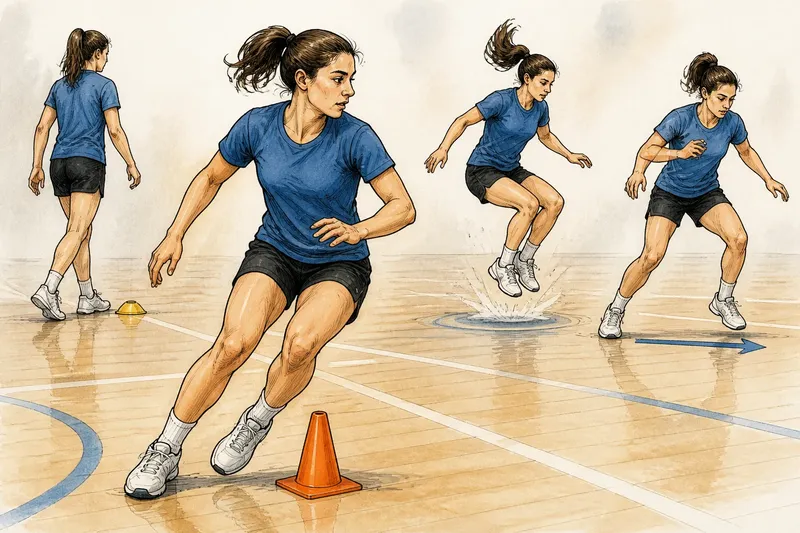
A rotating circuit links several stations in a planned order. A tennis session might include serving to a target, practising volleys with a partner and moving laterally between cones. Each station has its own equipment and task, so the coach can organise different activities within one session.
The format is useful when athletes need to practise distinct skills without giving the whole group the same task at once. It can also help a coach divide a large space into manageable areas. The trade-off is that each athlete returns to a station after a pause, and moving between activities takes time.
Keep the route simple. Put a station card beside each activity, set out the equipment before the session and show athletes where to go next. A clear layout leaves more of the session for practice and less for explaining where things belong.
Which format fits the coaching goal?
Match the session structure to what you need to observe. A single-task block suits close attention to one movement feature. A circuit suits a session with several distinct skills, especially when stations can run independently.
- Check whether the skill is unfamiliar; if athletes need to learn the basic action, use one clear task, but if they already understand it, consider a related station.
- Check whether the coach must watch one detail closely; if so, keep the group on one task, but if the activity can run safely with a simple instruction, include it in a circuit.
- Check whether each station has enough equipment for active turns; if not, combine tasks or share equipment within one station, but if athletes would queue, remove that station.
- Check whether the space allows groups to move without crossing another activity; if not, keep athletes in place and rotate equipment or roles, but if routes are clear, use the planned rotation.
- Check whether athletes can explain the purpose of their task; if they cannot, pause and clarify it, but if they can, let practice continue and observe their attempts.
- Check whether players spend more time waiting than practising; if they do, reduce the group size at the station or simplify the circuit, but if turns flow steadily, keep the arrangement.
Say a coach has eight players, four balls and a small court, all hypothetical planning details. The aim is to practise controlled receiving before using the skill in a game. The coach first pairs the players and has each pair exchange short passes, watching for a controlled first touch. Next, the coach sets out two stations: receiving and passing in pairs at one end, and a small-sided possession task at the other. The players rotate when the coach signals, with each pair keeping its ball. If the receiving station becomes crowded, the coach keeps the pairs in place and swaps the station task instead. The resulting plan offers a quiet chance to attend to the first touch, then a chance to use it under pressure, while avoiding a route across the small court.
How do space and equipment change the choice?
A circuit needs enough room for stations and a route between them. Mark boundaries with cones, keep balls and rackets within their station, and avoid placing a moving drill beside a task where athletes stand still. If the venue is cramped, a focused block or a circuit that rotates roles in place may be easier to manage.
Equipment can also determine whether stations are practical. If several tasks need the same limited set of balls, schedule them in sequence rather than sending athletes to stations that cannot run. A whiteboard or printed station cards can make task instructions visible, while a whistle or hand signal can mark transitions.
Check the layout before athletes begin. If a route crosses another group’s activity, change the rotation order or move a station; if the route is clear, explain it once and keep the signal consistent.
How can a coach judge whether the format is working?
Look for evidence that athletes are practising the intended skill, not merely moving through the plan. In a focused block, watch for the feature you selected, such as a controlled first touch. In a circuit, check whether athletes can start each task without repeated reminders and whether the intended skill appears at the relevant station.
Ask a concise question between turns: “What are you working on here?” If an athlete cannot answer, restate the task in plain language. If the athlete understands but struggles to perform it, make the task simpler before adding another station.
Use feedback in a way that fits the structure. A focused block gives the coach room to comment on one repeated action. At a circuit, keep instructions short enough to be remembered at the station; if an explanation needs more detail, stop the group rather than speaking over a transition.
What questions come up when choosing a format?
Is focused practice only for beginners?
No. Experienced athletes may use a focused block to adjust a specific part of a familiar skill. The task should still have a clear purpose and enough challenge to hold attention.
Can a circuit use related tasks only?
Yes. A circuit can connect parts of one skill, such as receiving, passing and moving into space. Related stations make it easier for athletes to see how the tasks fit together.
What should happen if athletes queue at a station?
Reduce the number of athletes at that station, add a simple supporting role or remove the station. The change should increase active turns without creating a new safety or space problem.
How can a coach combine both formats?
Begin with a focused block to introduce a detail, then use a circuit that gives athletes a chance to apply it. State the link between the two parts so athletes know why the session changes.
How should you choose today?
Name the action you want athletes to practise, then decide whether it needs close observation or belongs alongside other distinct tasks. Focused practice gives the coach a steadier view of one action; a rotating circuit organises several activities but needs workable space, equipment and transitions.
For a session on focused practice versus a rotating circuit, choose the format that makes the skill visible and keeps athletes actively involved. If the setup creates queues, unclear instructions or crowded movement, simplify it before adding more tasks.