The Myth of the Perfect Performance
The myth of the perfect performance mistakes flawless execution for ability. Learn to assess decisions, technique and responses when a match refuses to follow the plan.
The myth of the perfect performance is easiest to spot when a match stops following the plan. A tidy opening can show control, but a player’s work is also visible in how they adjust their technique and choices when an opponent changes the task.
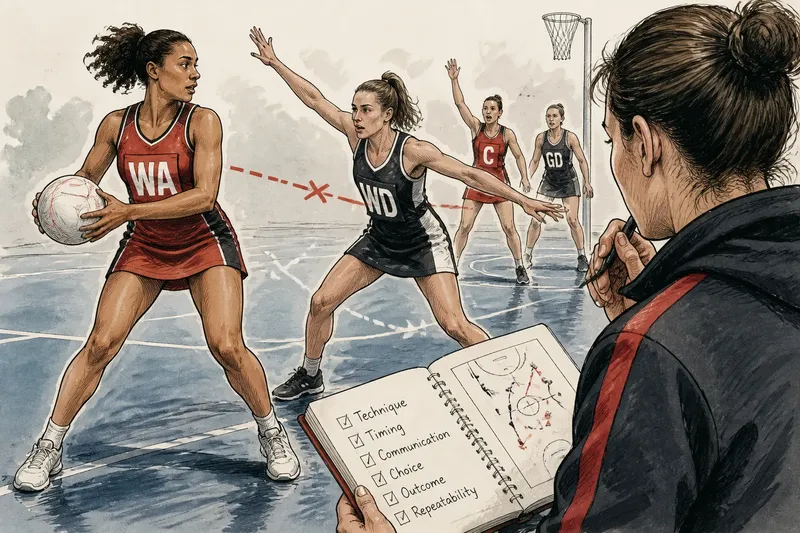
Imagine Nia, a fictional wing attack for a local netball club. Her coach has asked her to offer short passing options, move the ball and avoid forcing feeds into the shooting circle. At first, she receives cleanly and links accurate passes. Then the opposing wing defence blocks the central lane and waits for Nia to commit. The pattern that worked has stopped being useful.
What does the myth of the perfect performance hide?
If a coach judges Nia only by her early passing accuracy, the match appears to be going well. That narrow view misses the new constraint: her opponent has taken away the route Nia expected to use. Repeating the same pass might look decisive, but it would ignore the position of the defender and the risk to possession.
“Perfect” often describes an outcome after the fact. A pass reaches its target or a play unfolds as planned, and the successful sequence can make every choice look inevitable. But an athlete acts with incomplete information. A reasonable decision can lead to an imperfect result; a weak decision can sometimes be rescued by a teammate or an opponent’s error.
Results matter, but one moment cannot explain the quality of the choice that produced it. Ask what the athlete could control: technique, timing, communication and execution. Then consider what depended on teammates, opponents or the bounce of the game.
Judge the decision in the context the athlete actually faced.
How can a coach separate technique from outcome?
Start by describing the action before judging it. In Nia’s case, the coach might note that she turned into the central lane, saw the defender set in front of her, and chose a return pass. This account is more useful than calling the play either brilliant or timid.
A review can separate three parts:
- Technique: Check whether the pass was controlled and delivered with a suitable weight. If it reached the teammate cleanly, discuss how to repeat that execution; if it was difficult to handle, practise the release and target.
- Timing: Check whether the ball left Nia’s hands before the defender closed the lane. If it did, identify what made the timing effective; if it did not, work on preparing the pass earlier.
- Communication: Check whether Nia and her teammate signalled or presented a clear target. If they did, retain that method; if they did not, agree on a simple call or hand signal.
- Choice: Check whether a forward route was genuinely open. If it was, discuss why Nia did not use it; if it was not, assess whether the return pass or another safe option best served the possession.
- Outcome: Check what happened after the pass, including the receiver’s action and the defender’s response. If the team kept the ball, identify what that enabled; if possession ended, locate the point where the sequence broke down.
- Repeatability: Check whether the action can be performed reliably in practice at the required pace. If it can, use it in a more demanding drill; if it cannot, simplify the task and rebuild control before adding pressure.
These checks do not turn a match into a scorecard. They give coach and player a shared description of what to retain and what to practise. Video can help: pause before the outcome, describe the body positions and passing lanes, then ask the athlete to explain what they were trying to do. A clip may not show everything the player heard or saw, so invite their account before settling on an interpretation.
What could Nia do when the direct pass is blocked?
In this invented match, Nia sees the defender holding the central lane. Instead of forcing the feed, she keeps moving and signals for her centre to stay wide. When the defender shifts towards the expected pass, Nia changes her angle and offers a return option. The ball goes backwards, but the centre retains possession and can reorganise the attack.
The action is not automatically the right answer. A backward pass can waste an open opportunity, just as a difficult forward pass can be worthwhile when a teammate has a clear route. Nia’s coach should assess the available options, the quality of her execution and the team’s purpose in that passage—not reward a direction of pass by itself.
Say Nia has two visible choices: a forward feed with a defender already in its path, or a return pass to a centre who is set and calling for the ball. She chooses the return, delivers it at a manageable height, and the centre keeps possession. The trade-off is clear: the team gives up immediate forward progress to avoid forcing the blocked feed. If the centre had been marked or the forward route had opened, the better decision might have changed.
Describe the action and its trade-off before calling it safe or risky.
How should coaches discuss imperfect performances?
Use specific questions rather than verdicts. “What made that pass difficult?” invites Nia to discuss technique and pressure. “Why did you mess that up?” leaves her to defend herself and gives little direction for the next session.
Keep the review narrow. Choose one passage, identify the skill involved, and agree on a change the player can try. If a pass was accurate but late, focus on preparation and release timing. If the timing was sound but the ball was hard to receive, work on its height, speed or target.
Balance correction with recognition. A coach can note that Nia avoided forcing a feed, then ask whether her body position allowed a quicker return pass. Praise the element she can repeat; correct the element she can practise. Avoid treating a fortunate outcome as proof that the technique was sound.
How can athletes practise without chasing perfection?
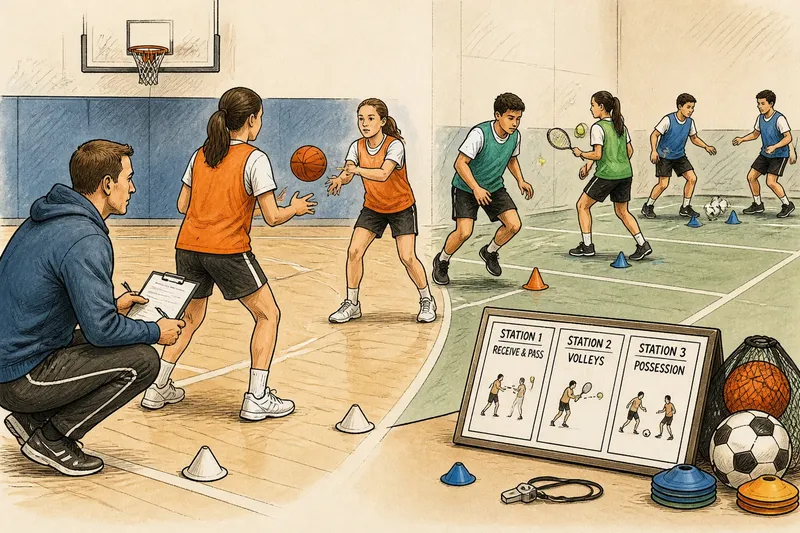
Build sessions that develop a particular skill, then vary the task enough to test whether the skill holds up. Nia’s coach could begin with short passing between two attackers at a steady pace. Once the passes are controlled, add a defender who can block the central route. The coach can then watch whether Nia adjusts her body position, pass choice and execution rather than simply repeating the same pattern.
Pause after a passage and ask a concrete question: “Was your target clear?” or “Could you deliver that pass while moving?” Restart with a different starting position or receiver so the player has to execute the skill in a changed arrangement. The aim is observable: a controlled pass to a reachable target, or a clear explanation of what made the action difficult. It is not a promise of a particular match result.
Keep technical repetition in the session. Reliable passing gives an athlete more usable options, while varied practice helps a coach see whether the technique holds under different demands. If control breaks down as the task changes, simplify the drill and rebuild the movement before adding another challenge.
What questions help assess a performance?
Does one mistake define a performance?
No. Identify the action that led to it and the player’s next response. Keep that moment in proportion to the rest of the performance.
Should a coach praise a safe pass?
Yes, when the pass fits the available options and serves the team’s purpose. If it avoids a genuinely open route, discuss why the player chose it.
What should video review focus on?
Pause before the result and describe technique, position and available space. Then ask the athlete what they intended, since the footage may not capture everything they experienced.
Can a sound action still have a poor outcome?
Yes. A teammate may mishandle a useful pass, or an opponent may disrupt a well-executed play. Review the action and the circumstances separately before deciding what needs work.
These questions help coaches distinguish a polished sequence from a useful performance. A difficult pass may be justified by the opening available; a simple return may be the sounder choice when the direct route is blocked. The decision depends on the task, and technique determines how well the player carries it out.
What does Nia’s match reveal about ability?
In the imagined match, Nia’s performance includes accurate early passing, a blocked route and a controlled return. None of those moments alone defines her ability. Taken together, they give her coach specific points to review: how she prepared the pass, how she responded to the blocked lane and whether her execution kept the team’s options open.
The myth of the perfect performance can make a tidy sequence seem like the only evidence that matters. But a player’s ability is also visible in repeatable technique, sound choices and the capacity to keep working when an action does not go as planned. After a match, select one passage and agree on a skill to retain and one detail to practise next.